


Have you ever watched a marching band and felt your chest vibrate with every rhythmic boom? That rolling thunder you hear weaving through the snare cracks and bass pulses often comes from one powerhouse section—the tenor drums.
They’re bold. They’re visual. They’re complex. And honestly? They’re one of the coolest instruments in the percussion world.
Let’s dive deep into everything you need to know about tenor drums.
What Are Tenor Drums?
Definition and Basic Structure
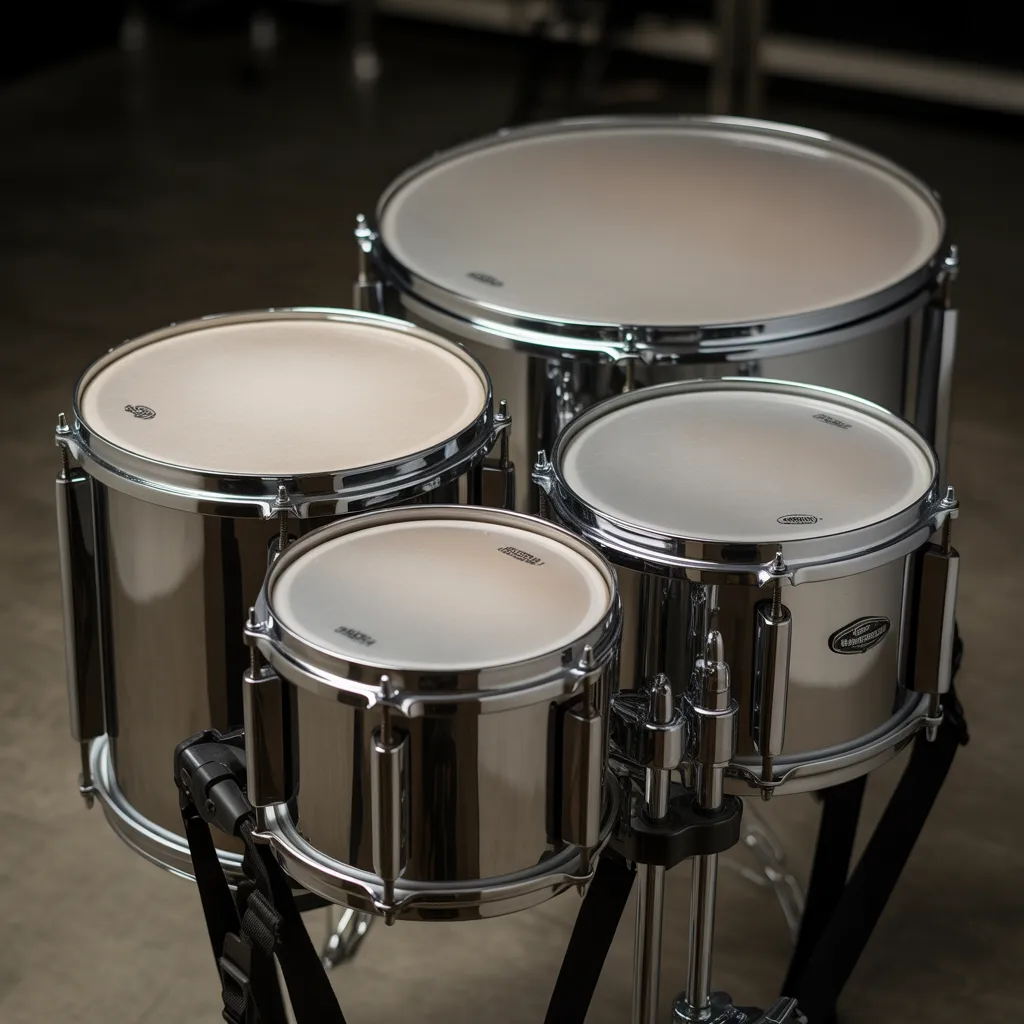
Tenor drums are a set of tuned drums typically played in marching bands and drum corps. Unlike a single snare or bass drum, tenor drums usually come in sets of four to six drums mounted together and worn using a harness.
Each drum has a distinct pitch. Together, they allow players to create melodic patterns—not just rhythms. Think of them as the “singing voices” of the drumline.
How Tenor Drums Differ from Other Drums
Snare drums snap. Bass drums boom. But tenor drums? They flow.
While snare drums focus on sharp articulation and bass drums emphasize low-end power, tenor drums offer tonal movement. Players physically move across the drums, creating sweeping patterns that are as visual as they are musical.
The History of Tenor Drums
Military Roots
Like many marching instruments, tenor drums trace their origins back to military bands. Early versions were single, rope-tension drums used to signal troops.
They were practical. Direct. Functional.
Evolution in Marching Bands
As marching bands grew more elaborate in the 20th century, especially in the United States, tenor drums evolved. Drum corps began experimenting with multiple tuned drums mounted together.
Organizations like Drum Corps International helped push the boundaries. Complex arrangements demanded more tonal possibilities, and multi-tenor setups were born.
Modern-Day Innovations
Today’s tenor drums are lightweight, durable, and engineered for projection. Synthetic heads, advanced carriers, and precision tuning systems have transformed them into high-performance instruments.
They’re no longer just rhythm keepers—they’re showpieces.
Types of Tenor Drums
Single Tenor Drum
The original form. A single drum tuned to a mid-range pitch. Still used in some traditional marching units.
Simple. Effective. Classic.
Multi-Tenor (Quad/Quint) Drums
Now we’re talking.
These are the setups you usually see in modern drumlines.
Quads
Four drums mounted together. Each drum is tuned differently, allowing melodic movement across the set.
Quints
Five drums, adding an extra layer of tonal depth. More drums mean more range—and more physical challenge.
Some setups even include “spock” drums—small, high-pitched auxiliary drums for added flair.
Tenor Drums in Drum Kits
In standard drum kits, “tenor” can refer to mid-range toms. While different from marching tenors, they serve a similar tonal purpose—bridging high and low frequencies.
Parts of a Tenor Drum
Drum Shell
Usually made from wood or composite materials. The shell shapes the tone and projection.
Drumhead
The surface you strike. Modern heads are typically synthetic for durability and weather resistance.
Rims and Hardware
These maintain tension and allow precise tuning. Strong hardware is critical because tenor drummers move—a lot.
Carrier and Harness
Without a proper harness, playing multi-tenors would be nearly impossible. The carrier distributes weight across the shoulders and torso.
Trust me, after a 10-minute performance, you’ll appreciate good ergonomics.
How Tenor Drums Work
Tuning and Pitch
Each drum is tuned to a different pitch. Lower drums produce deeper tones, while smaller drums give higher notes.
When played in sequence, they create melodic lines—almost like a xylophone made of drums.
Sound Projection and Resonance
Because tenor drums are played outdoors, they’re designed for projection. The shell depth and head tension determine how far that sound travels.
It’s physics meeting art.
Playing Techniques
Basic Strokes
Everything starts with fundamental strokes—full, down, tap, and up strokes. Master these, and you build control.
Sweeps and Crossovers
Here’s where tenor drumming gets flashy.
Sweeps involve dragging the stick across multiple drums in one smooth motion. Crossovers require one hand to cross over the other—visually stunning when done right.
It’s choreography meets percussion.
Rolls and Rudiments
Paradiddles. Flams. Double strokes.
Rudiments are the grammar of drumming. Tenor players apply them across multiple surfaces, adding complexity.
Tenor Drums in Marching Bands
Role in the Drumline
The drumline typically includes snares, bass drums, cymbals, and tenors. Tenors bridge rhythmic sharpness and low-end depth.
They add color. Movement. Energy.
Visual Performance Elements
Unlike stationary percussionists, tenor drummers move constantly. Stick tricks, body turns, and synchronized visuals are part of the performance.
Watch any DCI championship show and you’ll see what I mean.
Choosing the Right Tenor Drum
Skill Level Considerations
Beginners may start on smaller configurations. Advanced players often move to quints for expanded range.
Budget and Brand Options
High-quality tenor sets can be expensive. Brands used in competitive circuits are designed for durability and tone clarity.
Invest wisely—your shoulders will thank you.
Size and Configuration
Drum size affects both pitch and weight. Younger players may need lighter setups to avoid strain.
Comfort equals longevity.
Maintenance and Care
Cleaning
Wipe down shells and hardware regularly. Sweat and dirt can damage finishes.
Head Replacement
Drumheads wear out over time. Dents and loss of tone signal it’s time for a change.
Storage Tips
Store in padded cases and avoid extreme temperatures. Weather can warp shells and affect tuning.
Benefits of Learning Tenor Drums
Coordination and Muscle Memory
Playing across multiple drums builds serious coordination. Your brain works overtime.
Teamwork and Discipline
Marching band demands precision. You learn accountability fast.
Performance Opportunities
From halftime shows to national competitions, the stage is big—and loud.
Famous Drumlines and Performances
DCI and Competitive Marching
Organizations like Blue Devils Drum and Bugle Corps have legendary tenor sections. Their technical precision sets global standards.
University Marching Bands
University bands across the U.S. showcase elite tenor players during football seasons and national events.
These performances inspire the next generation.
Conclusion
Tenor drums aren’t just instruments. They’re athletic. Musical. Visual. They demand stamina, coordination, and creativity.
Whether you’re stepping into your first drumline rehearsal or watching a championship performance, tenor drums bring electricity to every show.
They’re the heartbeat that makes marching music pulse.
And once you hear that rolling sweep across tuned heads? You’ll never forget it.
